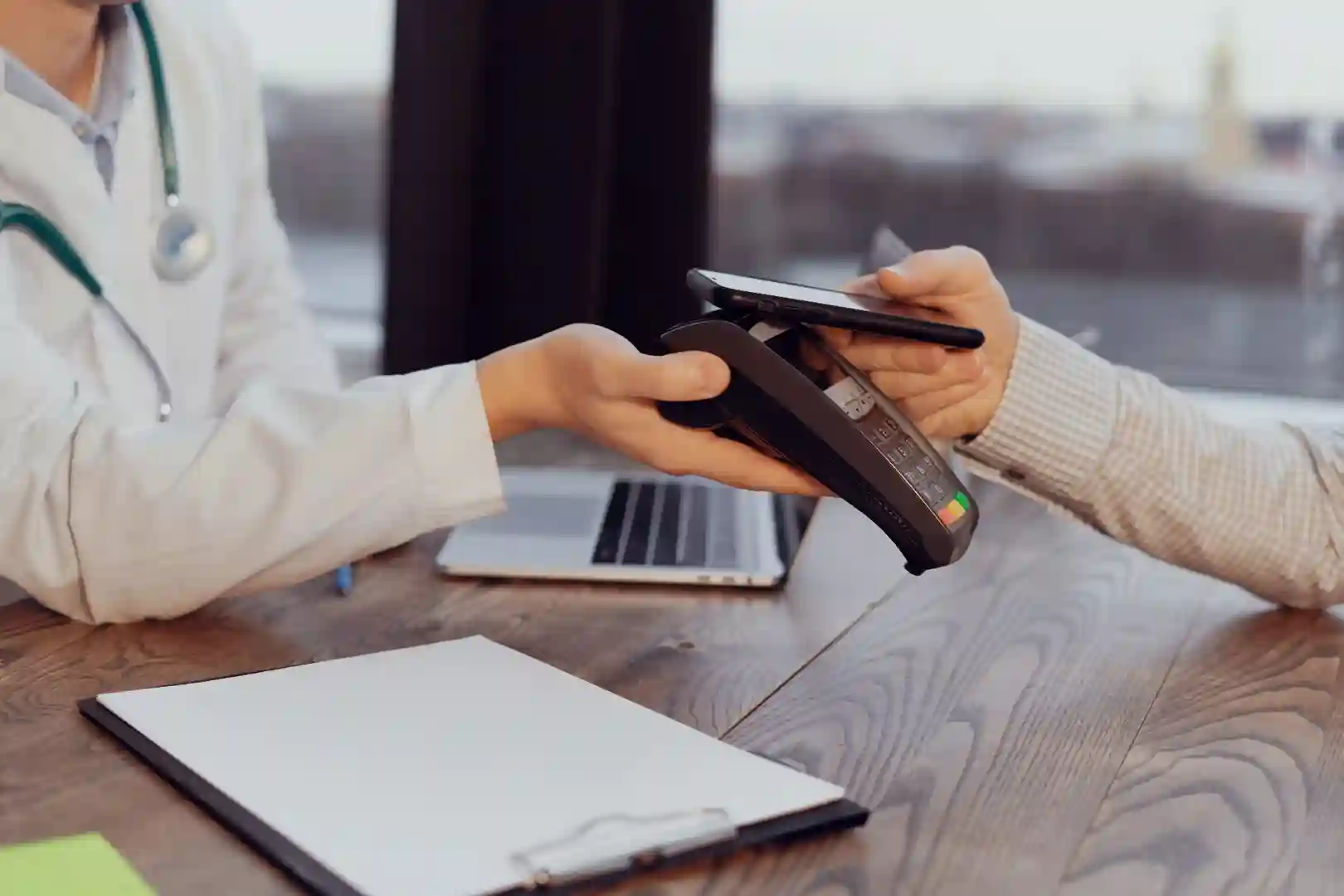
Why online payments improve clinic cash flow
The payment problem in healthcare
Healthcare has a payment problem. Unlike retail or e-commerce, where transactions happen instantly, medical practices often wait weeks or months to collect patient balances. The reasons are complex:
- Patients don't always understand what they owe
- Payment options are limited (cash, check, card at the front desk)
- Billing statements are confusing
- There's no convenient way to pay outside office hours
The result? The average days in accounts receivable (A/R) for medical practices is 40–50 days, and many practices write off 5–10% of patient balances as uncollectable.
How online payments change the equation
1. Immediate collection at time of service
With integrated payment processing, you can collect copays and known balances at check-in — or even before the visit, as part of the digital intake process. Collecting upfront dramatically reduces outstanding A/R.
2. Convenient payment links
After a visit, send patients a text or email with a secure payment link. They can pay instantly from their phone — no need to write a check, find a stamp, or call during business hours. Practices that implement text-to-pay see a 35–40% increase in on-time payments.
3. Payment plans made easy
For larger balances, offer automated payment plans. Patients set up recurring payments, and the system handles the rest. This reduces the barrier to paying while ensuring you collect the full amount over time.
4. Reduced billing costs
Every paper statement costs $5–$10 to produce and mail. With digital billing and online payments, you eliminate printing, postage, and the staff time to manage the process. For a practice sending 500 statements per month, that's $2,500–$5,000 in monthly savings.
Key features to look for
When evaluating online payment solutions for your practice:
- PCI compliance — essential for handling credit card data securely
- Integration with your PMS/EHR — payments should post automatically
- Multiple payment methods — credit card, debit, ACH/bank transfer, HSA/FSA
- Mobile-friendly — patients should be able to pay from any device
- Automated receipts — sent instantly after payment
- Reporting and reconciliation — easy-to-read financial dashboards
Real-world impact
Clinics that implement online payments typically see:
- 30–40% reduction in days in A/R
- 25–35% increase in patient collection rates
- 50–70% decrease in paper statement costs
- Higher patient satisfaction — convenience matters
Getting started
The transition to online payments is one of the quickest wins in practice modernization. Most platforms can be set up in days, not weeks, with minimal disruption to your existing workflow.